A Machine With a Mission:
Bringing Life-Saving Resources to Seward
Sometimes making a difference begins with something simple: putting the right resource in the right place at the right time.
At Qutekcak Native Tribe, we believe community wellness means more than responding when someone is already in crisis. It means prevention. It means education. It means reducing barriers. It means creating access to practical resources that can help people take care of themselves, their families, and one another.
That is the purpose behind Qutekcak Native Tribe’s Community Health Vending Machine.
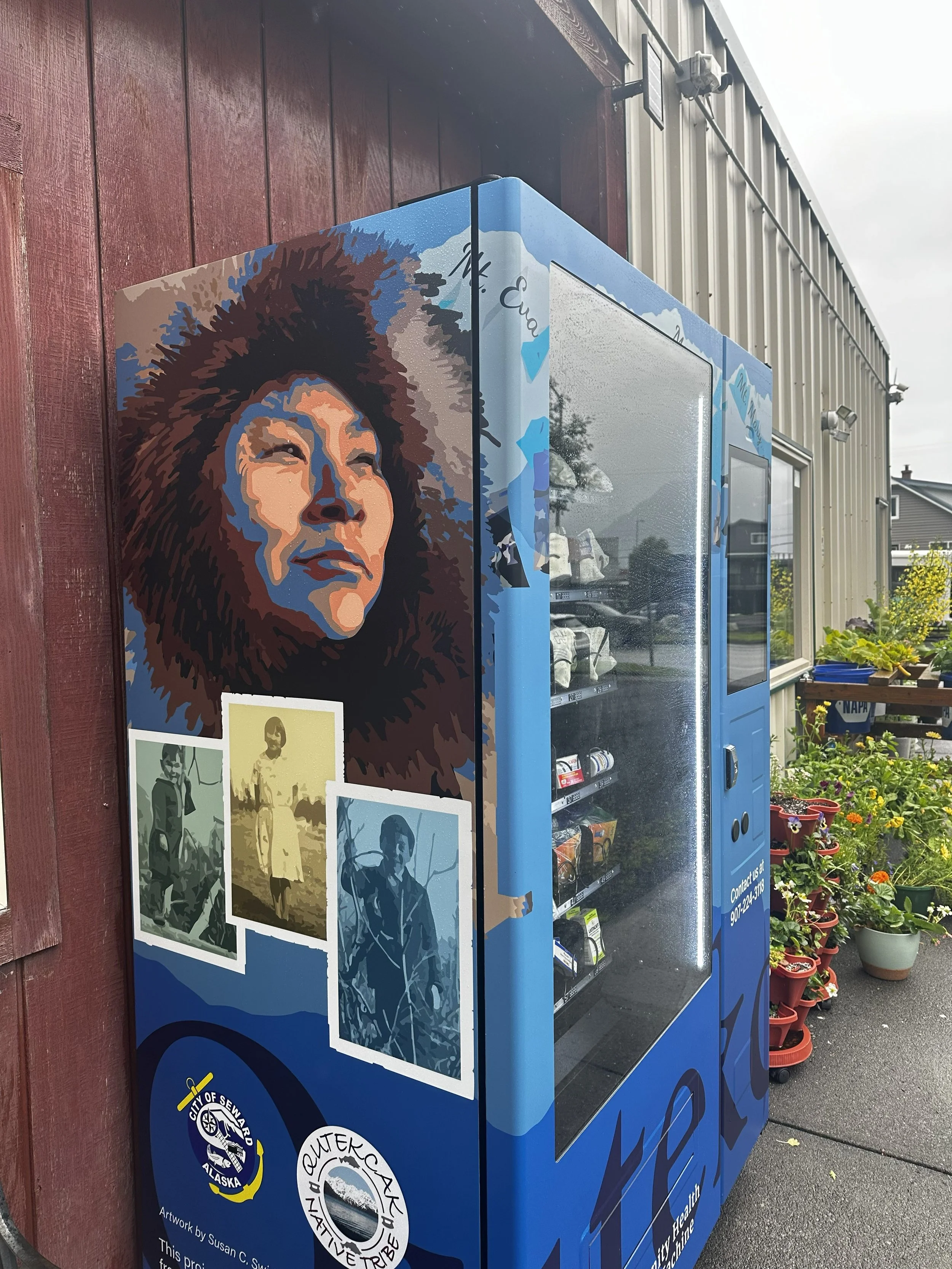
Located at Qutekcak Native Tribe, 221 3rd Avenue in Seward, the machine provides community members with access to health, harm reduction, overdose prevention, hygiene, medication safety, and wellness supplies.
It may look like a vending machine.
But its mission is much bigger.
It is about access, preparedness, dignity, prevention, and saving lives.
Why Access Matters
Substance misuse and overdose affect families and communities throughout Alaska.
These issues do not belong to one family, one neighborhood, one generation, or one group of people. They can affect anyone.
One of the most important things a community can do is make resources available before an emergency happens.
People should not have to wait until a crisis to find out where help is available.
They should not have to wonder where to obtain an overdose response kit.
They should not have to feel embarrassed about needing basic hygiene or wellness supplies.
Families should not have to search for medication safety resources after a problem has already occurred.
And people should not have to fear judgment simply because they are taking steps to protect themselves or someone they care about.
The Community Health Vending Machine helps remove some of those barriers by bringing resources directly into the community.
Sometimes access can be the difference between being prepared and being helpless when every second matters.
What Is Currently Inside the Machine?
The Qutekcak Community Health Vending Machine is intentionally stocked with more than one type of resource.
It supports whole-community health by providing practical supplies that can be useful in everyday situations as well as emergencies.
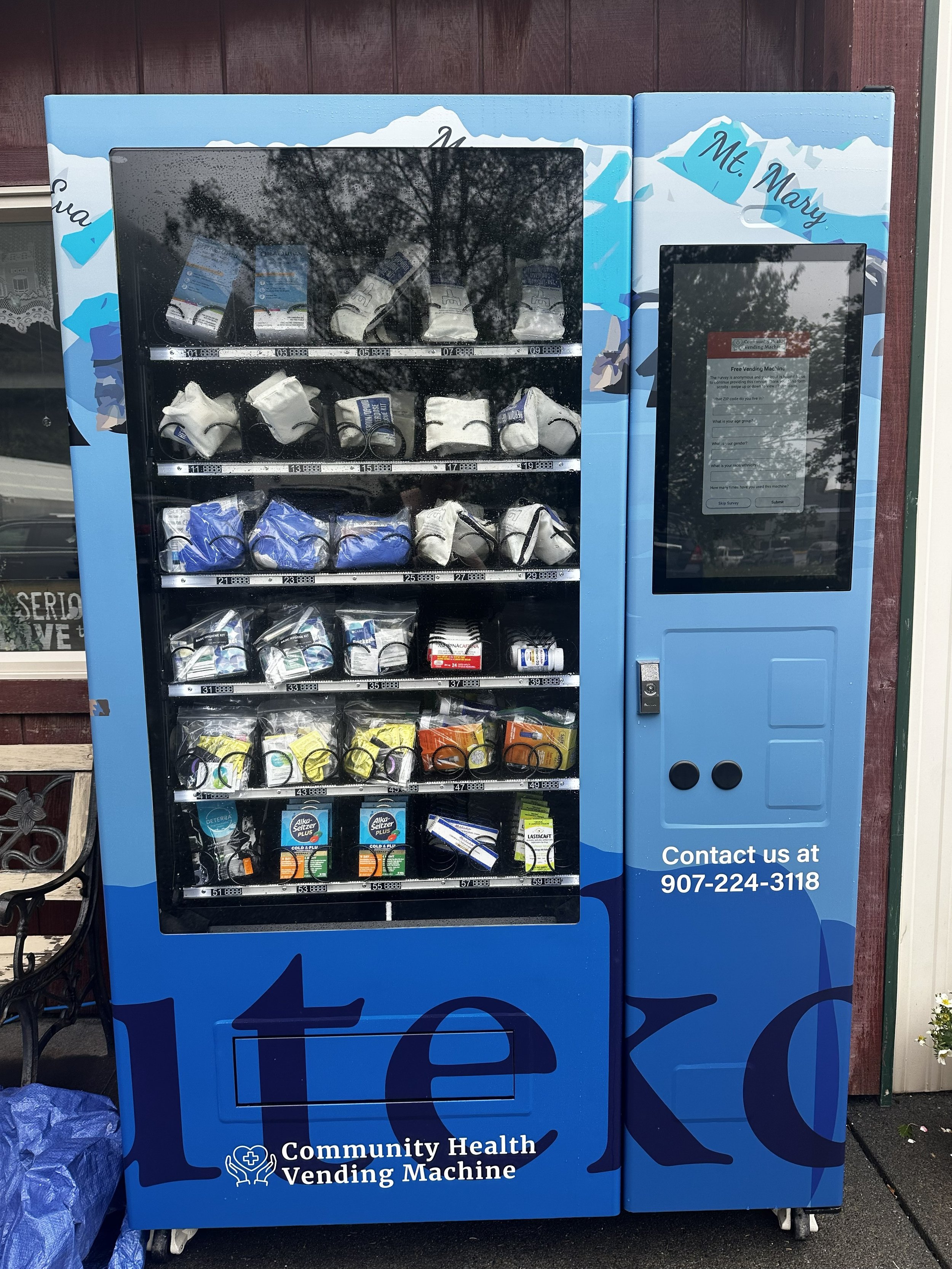
The current machine includes a variety of overdose prevention, hygiene, medication safety, testing, first-aid, and everyday health products. The photographed inventory includes overdose response supplies and kits, basic hygiene kits, medication-disposal products, cold-and-flu medicine, allergy-related products, and additional packaged health and prevention supplies.
Current items include:
Overdose prevention and response kits
Naloxone/overdose response supplies
Basic hygiene kits
Personal care supplies
Medication safety resources
Deterra drug deactivation and medication-disposal pouches
Cold and flu medication, including Alka-Seltzer Plus
Allergy-related products, including Lastacaft
Testing and prevention supplies
First-aid and health kits
Additional everyday health and wellness products
Inventory may change as products are used, restocked, or new supplies become available.
That flexibility is one of the strengths of the program.
The machine can continue evolving based on available resources and the needs of the Seward community.
The goal is not simply to keep a vending machine full.
The goal is to keep useful resources within reach.
More Than Overdose Prevention
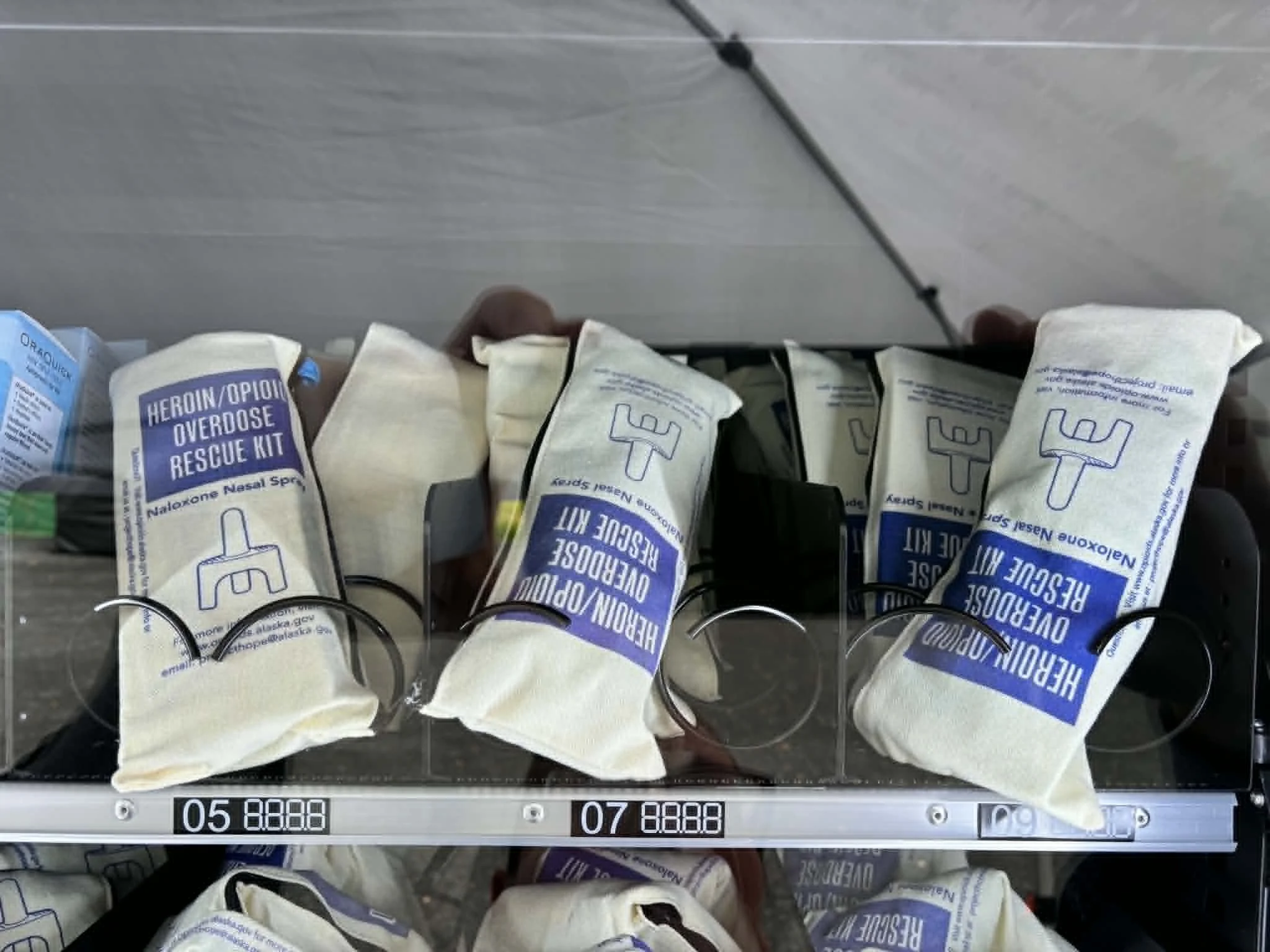
Overdose prevention is an important part of the Community Health Vending Machine, but it is not its only purpose.
This is a community health resource.
One person may visit because they want an overdose response kit available in their home.
Someone else may need a hygiene kit.
Another person may need a safe way to dispose of unused or expired medication.
Someone may need an everyday health product.
Another may be picking something up for a friend, neighbor, child, parent, or loved one.
Each of those needs matters.
Putting different types of health resources together also helps reduce stigma.
Someone walking up to the vending machine does not have to explain why they are there.
They do not have to justify needing help.
They can simply access a resource.
That is exactly the point.
Harm Reduction Is Prevention
There are still misconceptions about what harm reduction means.
At its core, harm reduction is practical public health.
It recognizes that while communities continue working toward prevention, treatment, recovery, education, and long-term solutions, people also need tools that can protect their lives today.
Providing overdose prevention resources does not mean giving up on someone.
Quite the opposite.
It means creating another chance.
Another chance to survive.
Another chance to seek treatment.
Another chance to reconnect with family.
Another chance to recover.
Another chance to build a different future.
A person cannot enter recovery tomorrow if they do not survive today.
That is why overdose prevention matters.
Removing Stigma From Preparedness
One of the largest barriers to seeking help can be stigma.
People may hesitate to ask for an overdose response kit because they are worried someone will assume they personally use substances.
But overdose preparedness is not only for people who use drugs.
Parents can carry overdose response supplies.
Grandparents can carry them.
Friends can carry them.
Coworkers can carry them.
Teachers, advocates, healthcare workers, business owners, public safety professionals, and ordinary community members can carry them.
Being prepared to potentially save someone's life should never be something to be ashamed of.
The same principle applies to other resources in the machine.
Needing hygiene products is not shameful.
Needing medication safety resources is not shameful.
Needing a basic health product is not shameful.
Asking for help is not shameful.
Qutekcak Native Tribe wants the Community Health Vending Machine to be a place where people can simply access what they need.
Why This Matters in Alaska
Access can look very different in Alaska than it does elsewhere in the country.
Our communities can be separated by enormous distances.
Transportation may be limited.
Weather can interfere with travel.
Services that might be available on every corner in a large metropolitan area may be difficult to reach in smaller or more remote communities.
That makes bringing resources directly into communities especially important.
For Seward, having a Community Health Vending Machine means important supplies are available right here at home.
People do not necessarily have to travel somewhere else to begin accessing prevention and health resources.
Public health solutions work best when they are built around the realities of the communities they serve.
In Alaska, that frequently means bringing services and resources closer to people.
One of 11 Vending Machines Across Alaska
Qutekcak Native Tribe’s Community Health Vending Machine is part of a larger effort taking place throughout Alaska.
There are currently 11 vending machine locations across the state, helping make harm reduction and community health resources available in communities throughout Alaska.
Those locations include:
Qutekcak Native Tribe
QNT Lobby
221 3rd Ave.
Seward, AK 99664
Ketchikan Indian Community
201 Deermount St.
Ketchikan, AK 99901
Clinic lobby, first floor
Central Council Tlingit and Haida Indian Tribes of Alaska
410 Willoughby Ave.
Juneau, AK 99801
Annette Island Service Unit (AISU)
AISU Building
563 Brendible
Metlakatla, AK 99926
Homer Syringe Exchange
100 Trading Bay Road #8
Kenai, AK 99611
Cama'i Community Health Center
Clinic Lobby
2 School Road
Naknek, AK 99633
Sunshine Community Health Center
24091 Long Lake Road
Willow, AK 99688
Tanana Chiefs Conference
Chief Andrew Isaac Health Center
1717 W. Cowles St.
Fairbanks, AK 99701
Aleutian Pribilof Island Association
Grand Aleutian Hotel
498 Salmon Way
Unalaska, AK 99692
Maniilaq Association
436 5th Ave.
Kotzebue, AK 99752
Narcotic Drug Treatment Center, Inc.
1015 East 6th Avenue
Anchorage, AK 99501
Each machine represents another point of access.
Another community with additional resources.
Another opportunity for prevention.
And another step toward making lifesaving tools available regardless of where someone lives.
The People Who Made It Possible
Projects like this do not happen because of one organization or one person.
They happen because people from different organizations, agencies, businesses, healthcare systems, Tribal communities, and local governments decide to work together.
Qutekcak Native Tribe would like to recognize the Alaska Native Tribal Health Consortium and the individuals whose work helped make the vending machine possible.
Alaska Native Tribal Health Consortium
Eleanor Pollo
Lead – Public Health Specialist II
Jennifer Summers
Substance Misuse Prevention Program Manager
Tonia McWilliams
Purchasing Agent
Crystal Brown
Their work helped move this initiative from an idea to an actual resource serving people in Seward.
Behind every community project are people making phone calls, completing paperwork, coordinating supplies, finding funding, answering questions, solving logistical challenges, and connecting organizations.
Much of that work happens behind the scenes.
But without it, the finished project never reaches the community.
We are grateful to each person who helped bring this project to life.
Getting the Machine to Seward
In Alaska, getting equipment from one location to another can be an undertaking of its own.
Transportation, distance, freight coordination, weather, and logistics can all become significant pieces of a project.
Qutekcak Native Tribe would also like to recognize:
Breeyiana Pitts
Cencora – Triose Logistics Coordinator
for helping coordinate the shipping that brought the vending machine to Seward.
Every step mattered.
From obtaining the machine to coordinating transportation, delivery, installation, supplies, and ongoing stocking, many pieces had to come together before the community could access it.
The machine standing in Seward today represents the work of many hands.
Keeping the Machine Stocked
Getting the vending machine here was only the beginning.
A community resource is useful only when resources continue to be available.
That means maintaining inventory, identifying supplies, coordinating donations and shipments, monitoring use, and continually restocking the machine.
Qutekcak Native Tribe is grateful to the organizations helping us keep health and prevention supplies available, including:
Project HOPE
Direct Relief
Common Cents EMS Supply LLC
OraSure
Common Cents / Save Lives
Secure Medication / Safe RX
These organizations help provide supplies that allow the Community Health Vending Machine to continue serving Seward.
Sustainability matters.
A machine cannot help someone if the resource they need is not there.
That is why the partnerships supporting ongoing inventory are just as important as the partnership that brought the machine to Seward in the first place.
Partnering With the City of Seward
Community health cannot belong to only one organization.
It takes partnership.
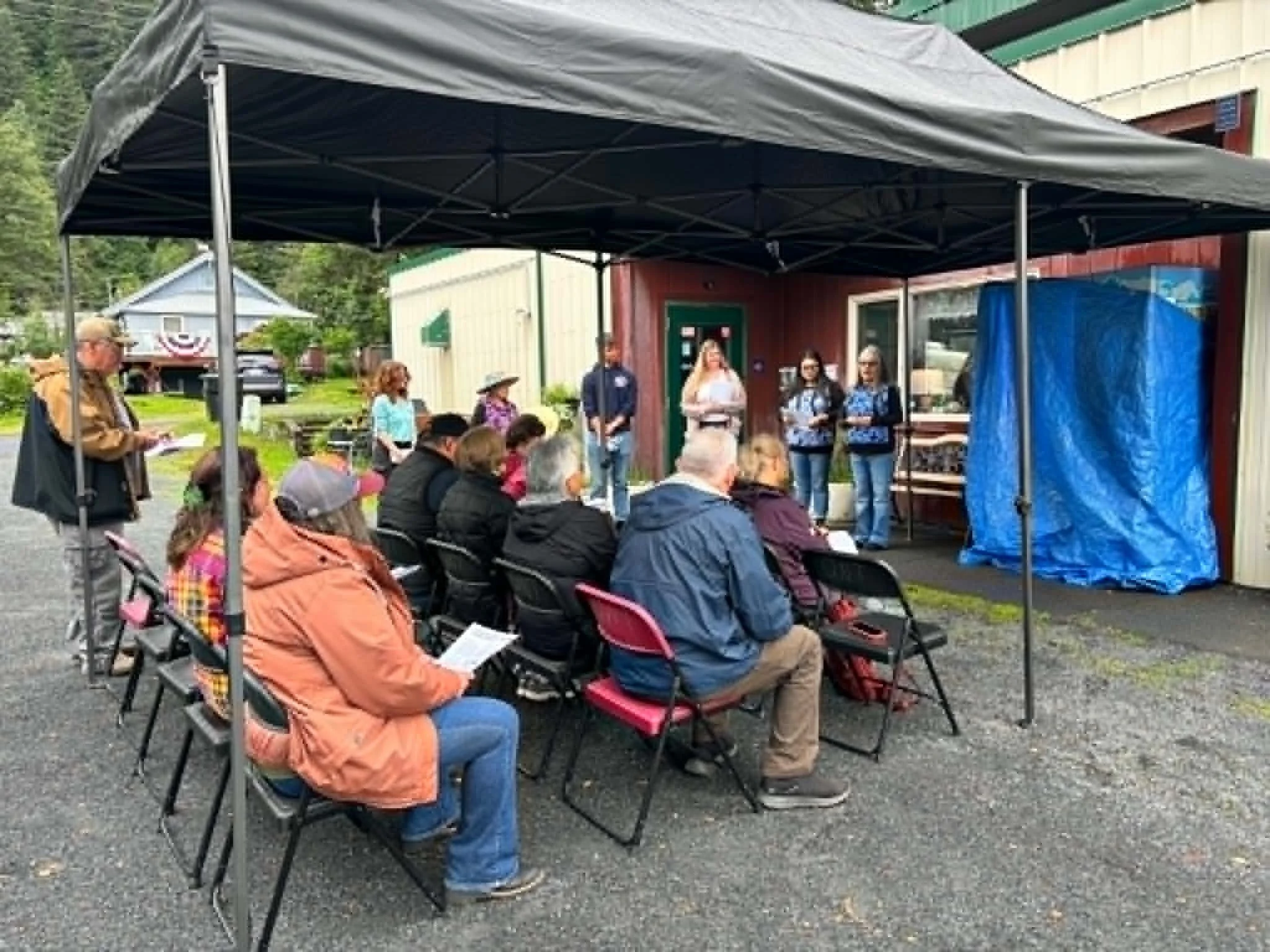
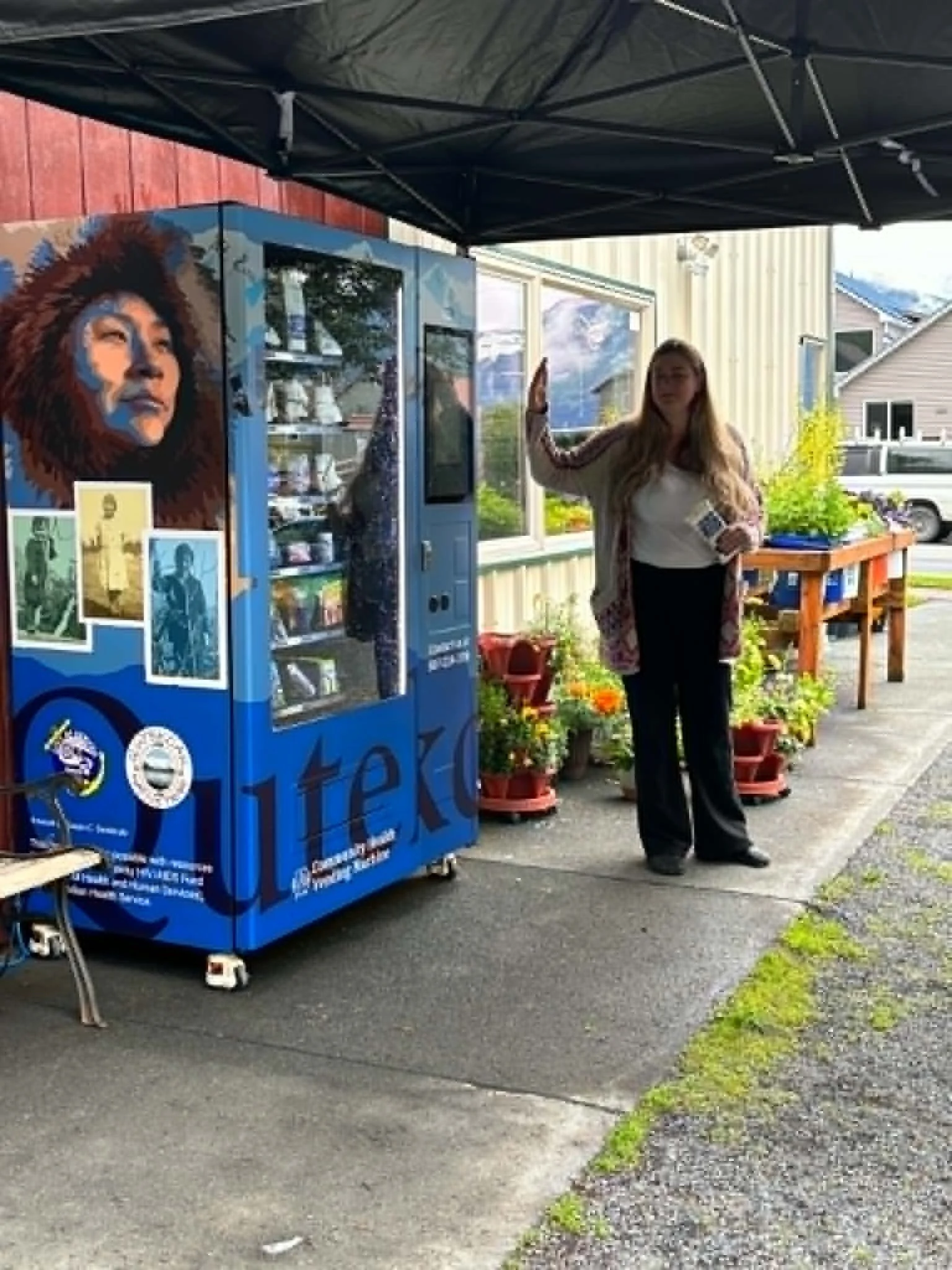
Qutekcak Native Tribe is proud to partner with the City of Seward as part of this initiative.
We especially recognize:
Kat Sorensen, City Manager
and
Kristin Wise, Executive Assistant
for their work in helping make this partnership possible.
Tribal organizations and local governments serve many of the same families, neighborhoods, and communities.
When we work together, we can accomplish more.
Substance misuse does not recognize jurisdictional boundaries.
Neither does overdose.
Neither does illness.
Neither should compassion.
Public health is stronger when Tribal organizations, municipalities, healthcare organizations, public safety agencies, nonprofits, businesses, and residents work together toward the same goal.
For Qutekcak Native Tribe and the City of Seward, that goal is a healthier and safer community.
Preparedness Can Save a Life
Emergencies rarely happen when people are expecting them.
An overdose can happen in a home.
At a gathering.
Among friends.
Around family.
Or somewhere completely unexpected.
In those moments, preparation matters.
Having an overdose response kit nearby can matter.
Knowing what to do can matter.
Knowing when to call for emergency medical assistance can matter.
The person who helps save someone's life may not be a physician or paramedic.
It may be a mother.
A father.
A brother.
A sister.
A friend.
A coworker.
A neighbor.
Or a stranger who simply happened to have the right resource at the right time.
Community preparedness means putting tools into the hands of ordinary people before an emergency occurs.
That is one of the reasons this vending machine matters.
Families Are Part of Harm Reduction Too
Substance misuse rarely affects just one person.
Families often carry the fear right alongside the individual who is struggling.
Parents may worry every time the phone rings.
Children may experience instability they do not understand.
Partners may wonder how to help.
Friends may recognize something is wrong but not know what to do.
Families may desperately want to protect someone they love while feeling completely unprepared.
Making overdose prevention resources available gives families and community members something concrete they can do.
They can become educated.
They can become prepared.
They can have supplies available.
They can know how to respond.
Sometimes that preparation may mean another family gets another day, another conversation, and another opportunity for their loved one to choose recovery.
Safe Medication Disposal Is Prevention Too
Community health includes preventing problems before they begin.
Unused and expired medications sitting in medicine cabinets can create risks.
That is why medication disposal resources are another important part of the Community Health Vending Machine.
Products such as Deterra medication deactivation pouches give people another option for safely managing medications they no longer need.
Medication safety may not receive the same attention as overdose response, but it is another important component of prevention.
Reducing unnecessary access to unused medications is one more practical action families can take to protect their homes.
Basic Needs Matter
Hygiene may seem like a small thing until someone does not have access to it.
A toothbrush.
Personal care products.
Basic health supplies.
These everyday items can affect health, comfort, dignity, confidence, and someone's ability to participate in work, school, appointments, or everyday life.
That is why the machine includes basic hygiene supplies alongside other community health resources.
Community wellness is not one-dimensional.
It is built from many small pieces.
Sometimes helping someone begins with meeting a very simple need.
Every Life Has Value
At the center of this work is one simple belief:
Every life has value.
People experiencing substance misuse are still members of families.
They are someone's child.
Someone's parent.
Someone's sibling.
Someone's friend.
Someone's coworker.
Someone's neighbor.
They have stories.
They have people who care about them.
They have potential.
And they have futures worth protecting.
Harm reduction begins by seeing the human being before seeing the problem.
Compassion does not mean pretending difficult realities do not exist.
It means facing those realities while choosing responses that preserve life, dignity, health, and the possibility of change.
Prevention, Treatment, Recovery, and Harm Reduction Belong Together
Communities do not have to choose between prevention and harm reduction.
We do not have to choose between treatment and overdose response.
We do not have to choose between accountability and compassion.
These approaches can work together.
Prevention can help stop substance misuse before it begins.
Education can help people understand risks and make informed decisions.
Treatment can help people address substance use disorders.
Recovery services can help people rebuild their lives.
Harm reduction can help keep someone alive long enough to reach those opportunities.
A strong community response needs all of them.
There is no single solution to substance misuse.
There is no single program that can solve every challenge.
But there are many interventions that, when combined, can create stronger communities and better outcomes.
The Community Health Vending Machine is one piece of that larger picture.
Tribal Leadership in Community Health
Tribal communities have long understood that wellness is interconnected.
The health of one individual affects a family.
The health of families affects the community.
And the strength and health of the community affect future generations.
Qutekcak Native Tribe's Community Health Vending Machine reflects that understanding.
This initiative is not only about responding to crisis.
It is about looking ahead.
Identifying gaps.
Creating partnerships.
Bringing resources closer to home.
Reducing barriers.
Supporting prevention.
And being willing to implement practical solutions that can make a difference.
A Machine Without Judgment
Perhaps one of the most powerful things about this vending machine is also one of the simplest.
It does not judge.
The machine does not ask someone why they need a resource.
It does not ask about their history.
It does not ask whether they have made mistakes.
It does not ask whether they have insurance.
It does not ask whether they are embarrassed.
It simply provides access.
For someone who may already feel vulnerable, that matters.
For someone who might otherwise walk away instead of asking another person for help, that matters.
For someone picking up an overdose response kit for a loved one, that matters.
For someone needing hygiene supplies, it matters.
Sometimes removing one small barrier is enough to help someone take the next step.
More Than a Vending Machine
When you look at the Qutekcak Community Health Vending Machine, you are not simply looking at rows of products.
You are looking at partnerships.
You are looking at prevention.
You are looking at community members being trusted to access the resources they need.
You are looking at organizations across Alaska and beyond working together.
You are looking at another tool for families who want to be prepared.
And you are looking at a community willing to say:
Your life matters.
An overdose prevented matters.
A family prepared matters.
A medication safely disposed of matters.
A hygiene kit placed into someone's hands matters.
A conversation started because someone saw this machine matters.
Every piece counts.
Building a Healthier Seward Together
No single vending machine will solve every challenge facing our community.
No single organization can either.
But meaningful change rarely comes from one enormous action.
It comes from people consistently choosing to do what they can.
One partnership.
One resource.
One program.
One person prepared.
One family supported.
One life saved.
Then another.
Qutekcak Native Tribe will continue working with our partners to strengthen prevention, expand access to resources, support community wellness, and create opportunities for people and families to find help before a situation becomes a crisis.
We encourage community members to learn what is available through the Community Health Vending Machine.
Talk about overdose preparedness.
Learn about medication safety.
Share information with your family.
Help reduce stigma.
And remember that you do not have to personally need a resource for it to be worth knowing where that resource is located.
You never know when something you learned today may help someone tomorrow.
Thank You to Everyone Who Made This Possible
Qutekcak Native Tribe extends our sincere appreciation to everyone who helped bring this Community Health Vending Machine to Seward and everyone who continues helping us keep it stocked and available.
Thank you to the Alaska Native Tribal Health Consortium, including Eleanor Pollo, Jennifer Summers, Tonia McWilliams, and Crystal Brown.
Thank you to Breeyiana Pitts and Cencora-Triose for helping coordinate shipping.
Thank you to Project HOPE, Direct Relief, Common Cents EMS Supply LLC, OraSure, Common Cents/Save Lives, and Secure Medication/Safe RX for helping provide the resources that keep the machine serving our community.
And thank you to our partners at the City of Seward, particularly City Manager Kat Sorensen and Executive Assistant Kristin Wise, for helping make this community partnership possible.
This project is an example of what can happen when organizations come together instead of working in isolation.
At Qutekcak Native Tribe, we believe strong communities are built through compassion, prevention, partnership, education, access, and action.
The Community Health Vending Machine puts those values into practice.
One machine. Eleven locations across Alaska. Many partners. Countless opportunities to help. One shared mission: protecting health and saving lives.
