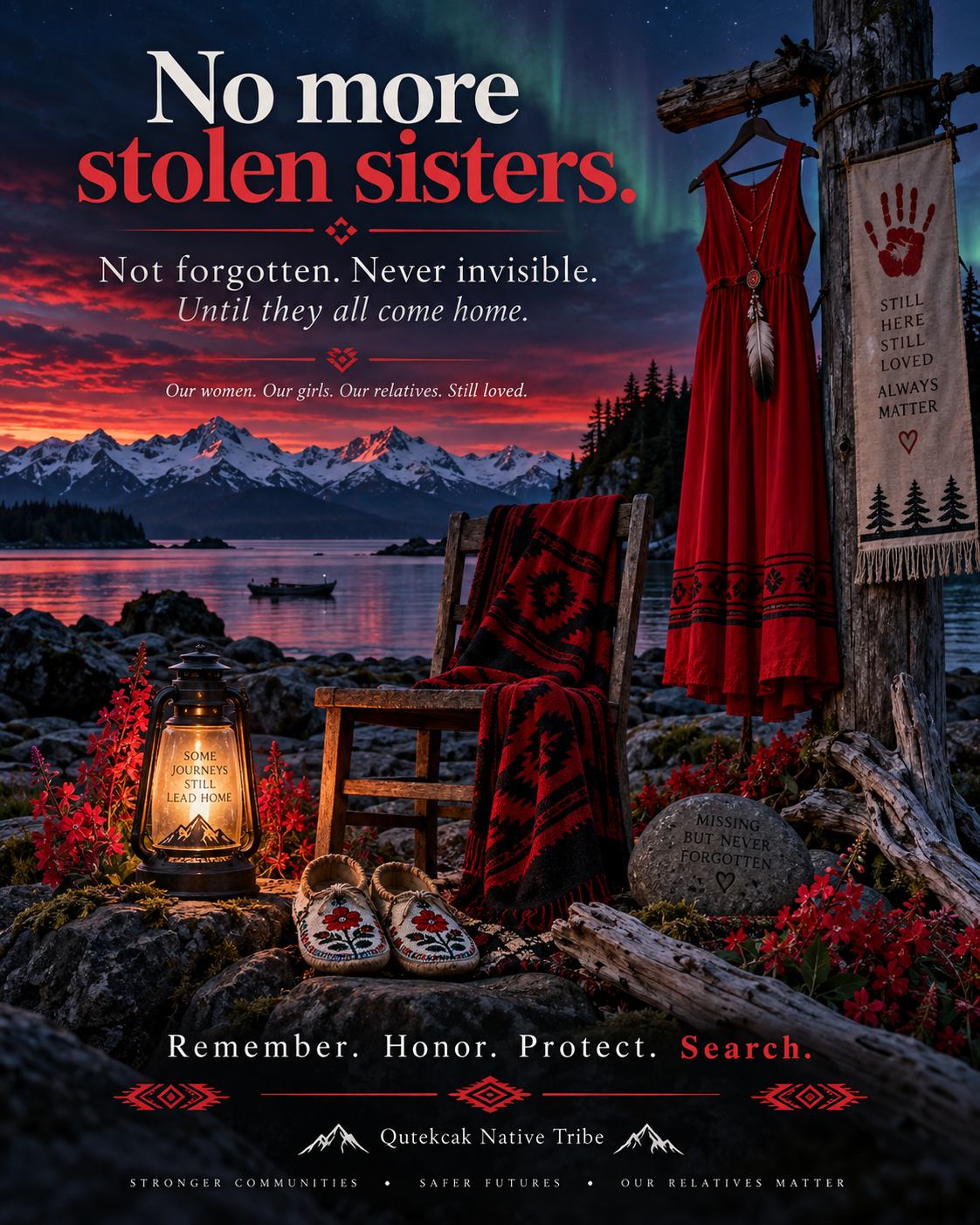
Not Forgotten. Never Invisible. By: Anastasia Thiele-Scheele
Why the Crisis of Missing and Murdered Indigenous Women and Girls Is Not an Accident
There is a particular kind of ache that comes from loving someone and knowing, somewhere underneath the love, that the world was never built to keep them safe.
Many of our families carry that ache quietly.
It doesn't show up in a family photo.
It shows up in the way a mother double-checks a daughter's location before bed, or the way an aunt goes still when a niece is five minutes late calling home.
We've spent this series talking about what to do when someone goes missing, how to stand with a searching family, and what's left behind when a chair stays empty.
What we haven't said out loud yet is why this fear lives in our community the way it does — and why, so often, it's our women and girls who carry the heaviest weight of it.
It isn't bad luck.
It isn't chance.
It's something that was built, piece by piece, over more than a century.
A Weight That Was Placed, Not Chosen
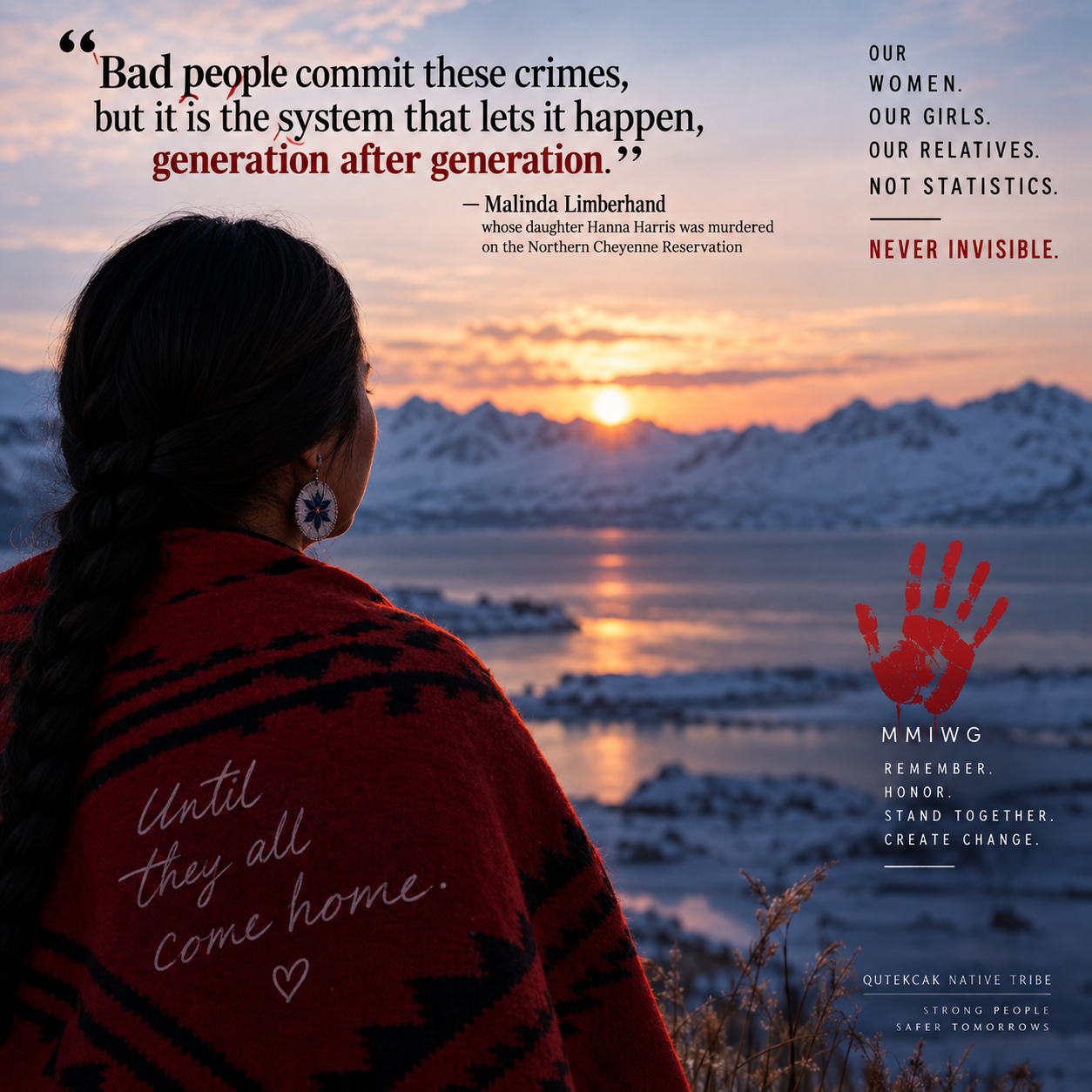
Malinda Limberhand, whose daughter Hanna Harris was murdered on the Northern Cheyenne Reservation, said it in a way that has stayed with advocates for over a decade:
“Bad people commit these crimes, but it is the system that lets it happen, generation after generation.”
That sentence carries something our community has always known in our bones — that this isn't only about individual violence.
It's about a hundred years of laws that decided, quietly and bureaucratically, whose safety mattered enough to protect.
Piece by piece, over more than a century, tribal nations lost the legal authority to prosecute crimes committed against their own citizens on their own land.
A woman could be harmed by someone who knew — the way a predator always knows — that the tangle of federal, state, and tribal jurisdiction meant no one agency would take responsibility for holding them accountable.
Sources:
MMIW: Understanding the Crisis Beyond Individual Acts of Violence — National Indigenous Women's Resource Center
https://www.niwrc.org/restoration-magazine/june-2020/mmiw-understanding-missing-and-murdered-indigenous-women-crisis
Another Broken Promise: The MMIWG2S Crisis and the Federal Indian Trust Obligation — Washington Law Review
https://digitalcommons.law.uw.edu/wlr/vol100/iss3/8
When Our People Aren't Even Counted
And then there's the quieter violence of simply not being counted.
In one year alone, thousands of Indigenous women and girls were reported missing to the National Crime Information Center — while the federal government's own database recorded only a small fraction of those cases.
Somewhere behind every uncounted case is a family who reported their daughter, their sister, their mother — and watched the system fail to even write her name down.
These aren't numbers.
They are people.
They are families waiting for answers.
They are empty chairs at dinner tables.
They are birthdays that still come every year.
They are relatives who deserve to be found.
Source:
MMIWG Research Guide — Syracuse University Libraries
https://researchguides.library.syr.edu/nativeheritagemonth/MMIWG
In Alaska, Distance Can Become Dangerous
In Alaska, that failure has teeth.
Our state troopers cover, on average, barely one officer per million acres of rural land.
For our villages, that isn't simply a statistic.
It's distance.
It's time.
It's the reality that help may not be minutes away.
Sometimes, it's the difference between someone coming home safe and someone becoming one more name we add to a growing list.
Alaska Native women and girls continue to carry a devastatingly disproportionate burden of violence, disappearance, and homicide throughout our state.
For families living with that reality, the crisis isn't something they read about.
They live it.
Sources:
A Tribal Perspective on the Crisis of Alaska Native Women and MMIW — National Indigenous Women's Resource Center
https://www.niwrc.org/restoration-magazine/june-2019/tribal-perspective-crisis-alaska-native-women-and-mmiw
Indigenous Echoes: Alaska's Stats on MMIP Likely Higher, According to Study — Alaska's News Source
https://www.alaskasnewssource.com/2025/04/05/indigenous-echoes-alaskas-stats-mmip-likely-higher-according-study/
What We Carry — and What We Refuse to Carry Alone
None of this is easy to sit with.
But there is something we hold onto here at Qutekcak:
Understanding why this happens takes the weight off individuals and puts it where it belongs — on systems that have to change.
It also means the fight for change isn't ours alone.
Laws like Savanna's Act and the Not Invisible Act exist because families, advocates, tribal nations, survivors, and communities refused to stay silent.
They pushed.
They testified.
They told their stories.
They carried photographs of the people they loved into rooms where those people had previously been treated like statistics.
And eventually, lawmakers had to listen.
It's not enough yet.
There is still much more work to do.
But it is proof that grief, when turned into voice and action, can move something.
Source:
Missing and Murdered Indigenous People (MMIP): Overview of Recent Research, Legislation, and Selected Issues for Congress — Congressional Research Service
https://www.congress.gov/crs-product/R47010
We Will Keep Saying Their Names
So when we say we won't stop telling these stories, this is why.
Every post in this series is an act of refusal.
A refusal to let our women disappear quietly.
A refusal to let our girls become numbers in a database.
A refusal to allow jurisdiction, distance, bureaucracy, or indifference to decide whose life is worth searching for.
And a refusal to let our relatives become statistics instead of people who were loved.
They are daughters.
Mothers.
Sisters.
Aunties.
Grandmothers.
Friends.
Relatives.
Community members.
People whose laughter is remembered.
People whose families still wait.
People whose lives mattered before they disappeared — and whose lives still matter now.
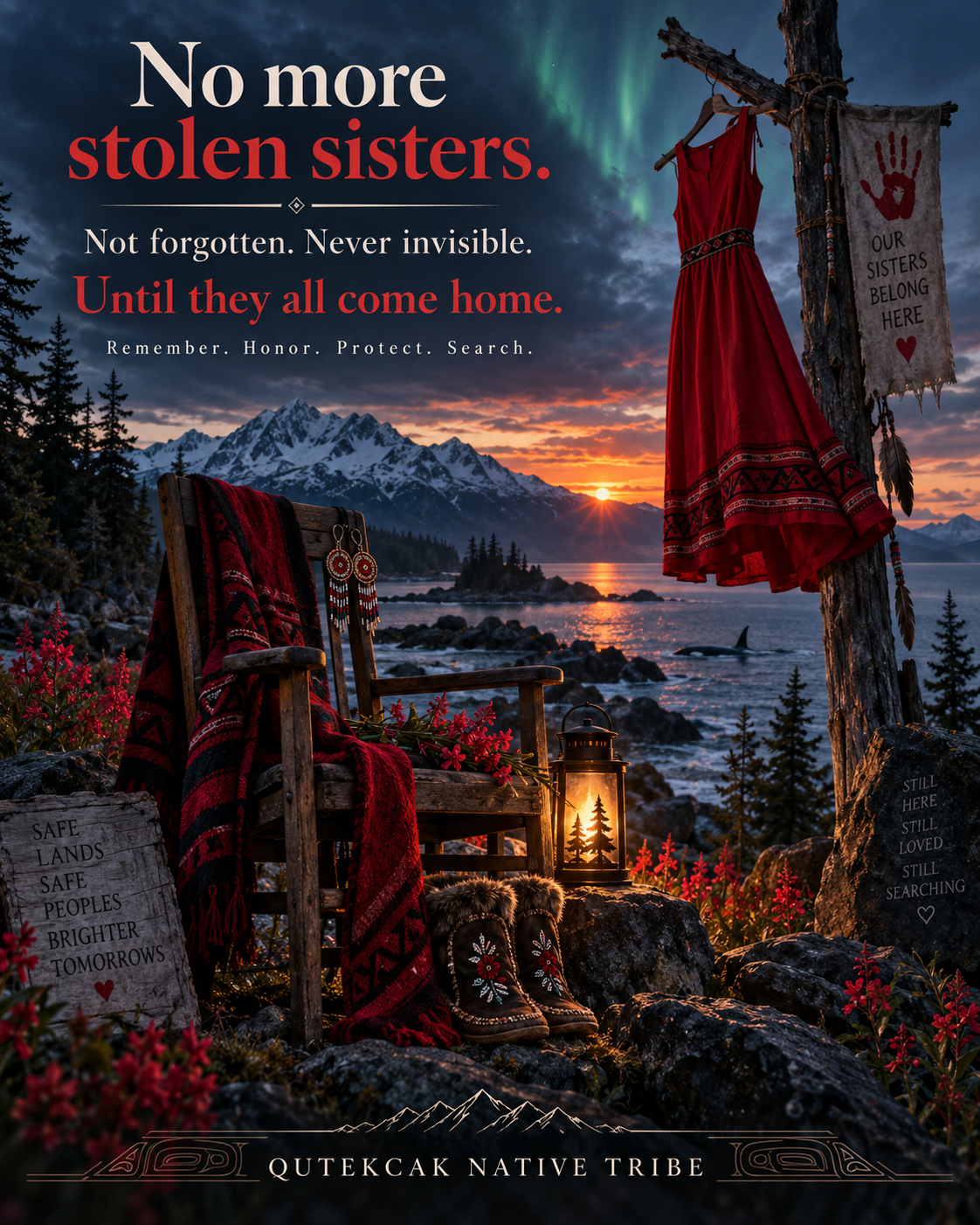
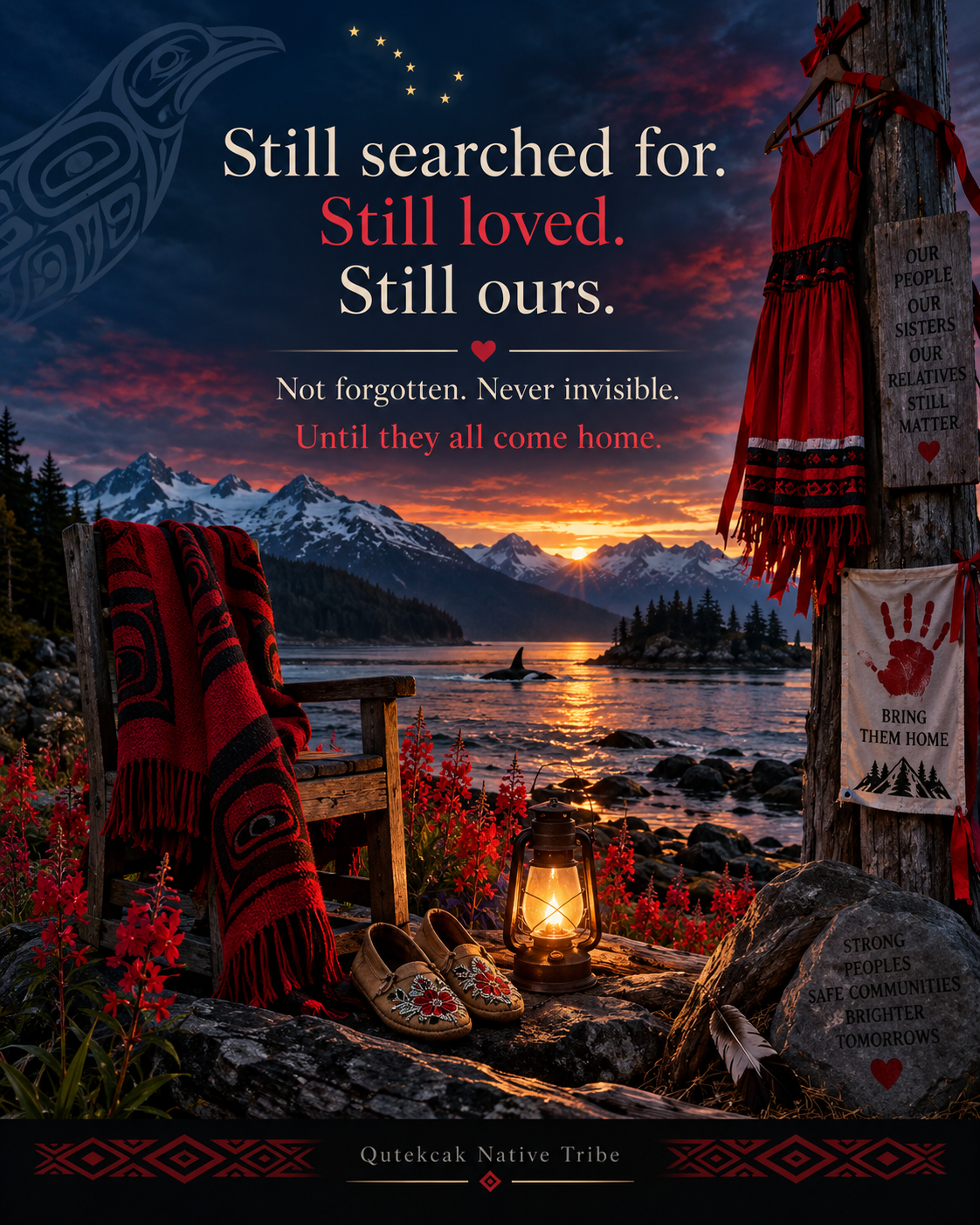
Not forgotten.
Never invisible.
Until they all come home.
Quyanaa,
Qutekcak Native Tribe