Every Hour Matters:
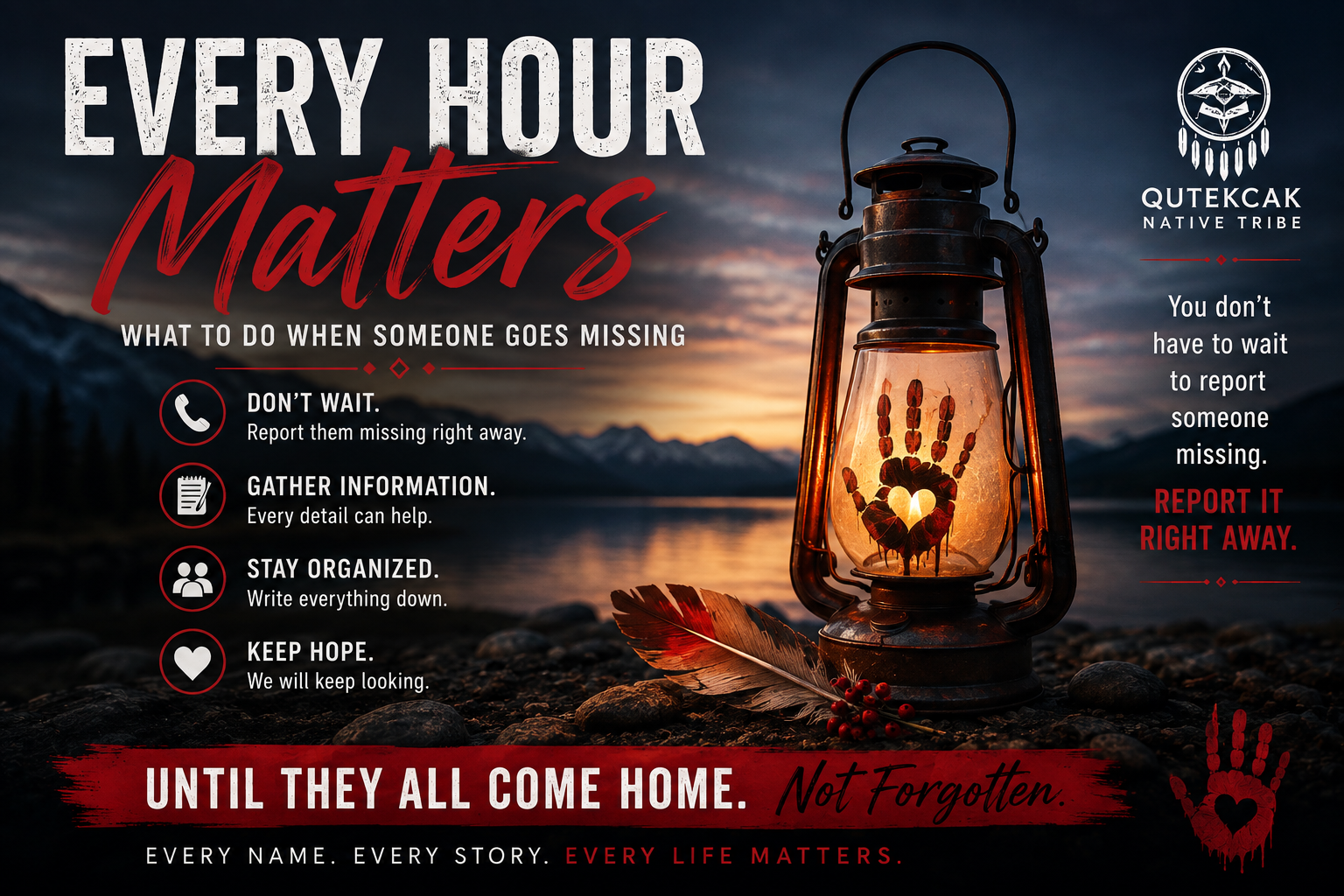
What to Do When Someone Goes Missing
When someone you love cannot be found, fear can take over quickly.
You begin calling.
Texting.
Checking with family.
Driving familiar roads.
Asking friends when they last saw them.
And somewhere in the middle of all of that, families may wonder:
How long are we supposed to wait before reporting them missing?
In Alaska, the answer is simple:
You do not wait.
The Alaska Department of Public Safety states clearly that there is no waiting period to report a missing person. If you believe someone is missing, law enforcement should be contacted immediately. Alaska DPS emphasizes that early reporting can be critical both to locating the person and to any related investigation.
For Qutekcak Native Tribe, this is a message we want every family to know.
Every hour matters.
Trust That Something Is Wrong
You know your people.
You know their routines.
You know when they normally call.
You know when they would pick up their children, arrive at work, come home, check in with family, or answer their phone.
If something is significantly different and you have reason to believe someone may be missing or in danger, you do not need to convince yourself that you are overreacting.
You can act.
A person does not have to be missing for 24 hours.
They do not have to be missing for 48 hours.
In Alaska, there is no required waiting period before making the report.
Start Gathering Information
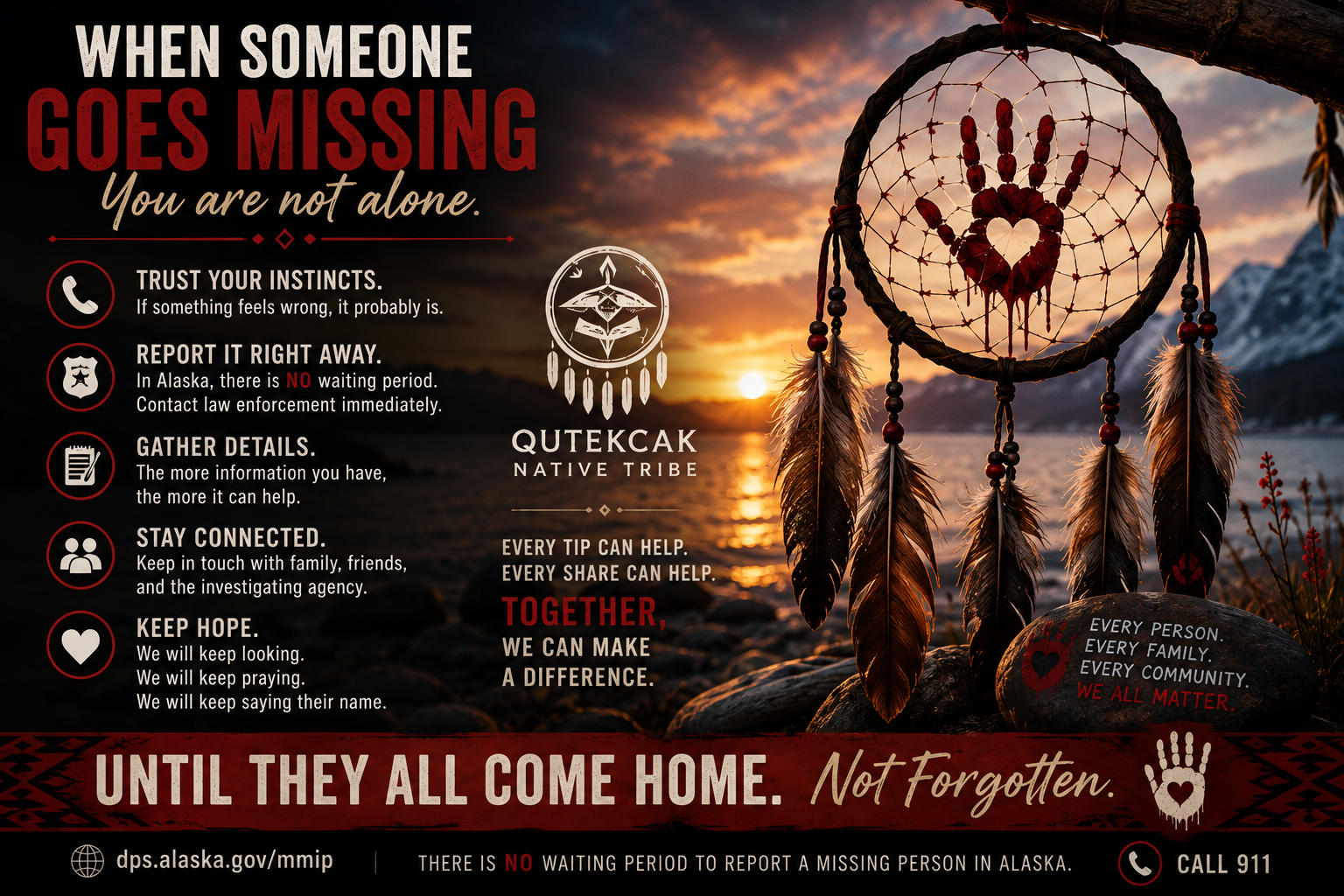
When contacting law enforcement, families can help by having as much identifying and last-known information available as possible.
That may include:
Their full legal name and any names or nicknames they commonly use.
Date of birth and age.
A recent, clear photograph.
Height, weight, hair color, eye color, and other identifying characteristics.
Tattoos, scars, birthmarks, piercings, or other distinguishing features.
What they were wearing when they were last seen.
The date, time, and location where they were last known to be.
Their vehicle description and license plate number, if applicable.
Their phone number.
Names of people they may have been with.
Places they frequently visit.
Any circumstances that may increase concern for their safety.
Alaska State Troopers' missing-person procedures identify information such as a recent photograph, physical description, last-seen date and location, clothing description, possible location, agency contact information, and an incident number as important information used in missing-person bulletins.
Do not worry if you do not have every piece of information.
Make the report anyway.
Information can continue to be gathered afterward.
Write Everything Down
In an emergency, details can become difficult to remember.
Start a written timeline.
Record when the person was last seen.
Who saw them.
Where they were.
Who you have spoken with.
Where you have searched.
What law-enforcement agency took the report.
The officer's or investigator's name.
The incident or case number.
Any new calls, messages, sightings, tips, or information you receive.
Having information organized can help families communicate consistently as a search continues.
Preserve What You Can
When someone goes missing, resist the urge to immediately clean their room, wash their clothing, throw things away, reset devices, or alter belongings that could potentially become relevant.
Likewise, preserve messages, voicemails, photographs, social-media communications, screenshots, and other information that may help establish a timeline.
If you are unsure whether something could be important, ask the investigating agency before changing or discarding it.
Social Media Can Help — But Use It Carefully
Social media can spread a missing-person alert across a community within minutes.
That can be incredibly powerful.
But families should also be thoughtful.
Whenever possible, coordinate public information with the investigating agency so that the information being circulated is accurate.
Use a clear and recent photograph.
Make sure names and identifying information are correct.
Include the appropriate law-enforcement contact or tip information.
And be cautious about publicly sharing sensitive details that investigators have asked the family to keep private.
A missing-person post should help generate useful information — not create additional confusion.
Keep Track of Tips
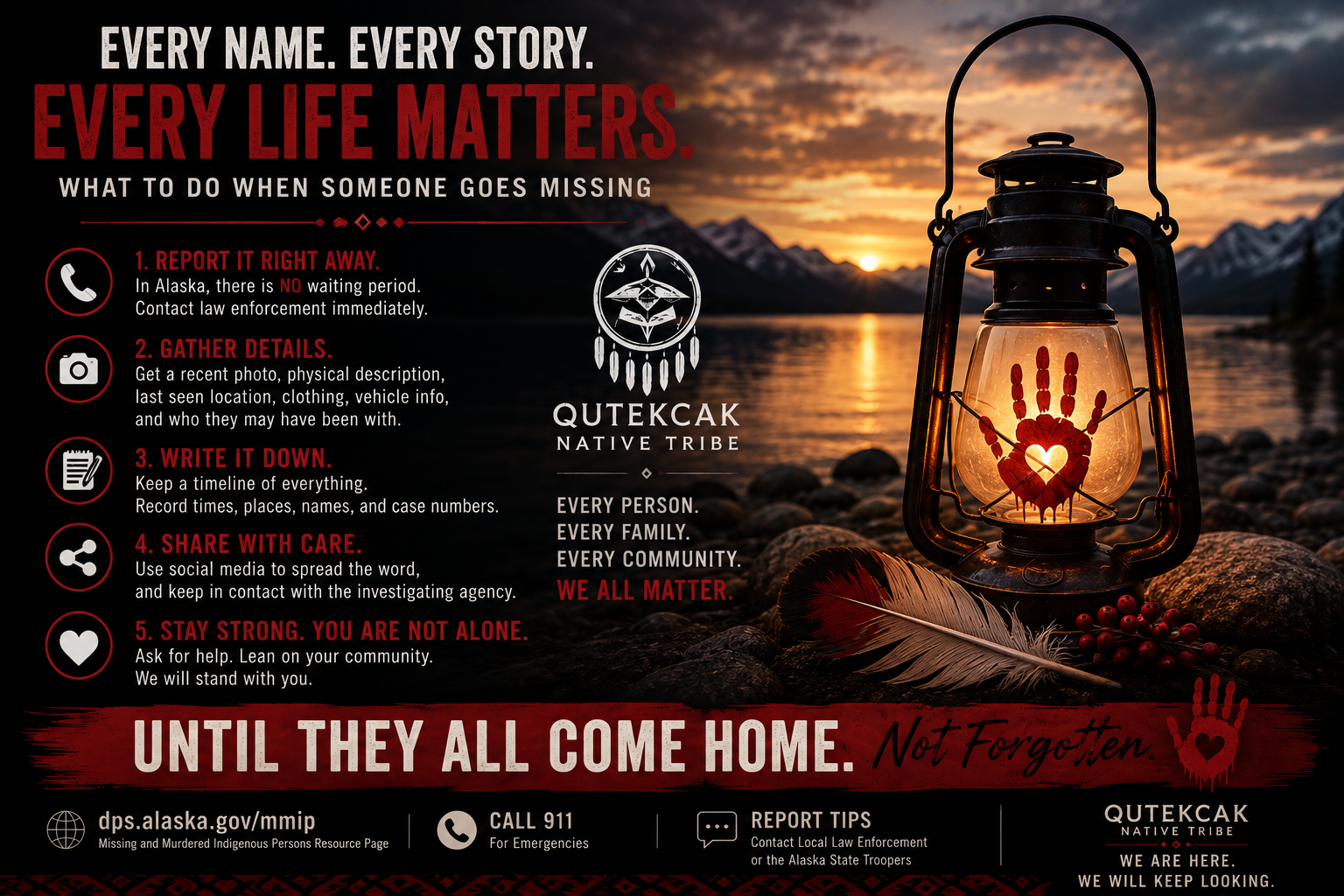
When a missing-person post begins circulating, people may contact family members directly.
Write those tips down.
Save screenshots.
Record names, phone numbers, dates, and times when possible.
Do not put yourself in danger attempting to investigate a suspicious lead alone.
Information that may be connected to the disappearance should be passed to law enforcement.
The Bureau of Indian Affairs Missing and Murdered Unit also accepts information and tips related to missing and murdered American Indian and Alaska Native cases and works with law-enforcement partners on active investigations.
Know About NamUs
Families may also hear the name NamUs during a missing-person investigation.
NamUs — the National Missing and Unidentified Persons System — is a national system used to help share and compare information about missing, unidentified, and unclaimed persons.
The system is used by law enforcement as well as families and friends of missing people, and it helps information travel across jurisdictional boundaries. It also provides access to forensic and analytical resources that can assist investigations.
For Alaska families, especially when someone may have traveled or when multiple jurisdictions become involved, having information connected across systems can matter.
Do Not Let Assumptions Silence You
Sometimes people hesitate because the missing person is an adult.
Because they have left home before.
Because they struggle with substance use.
Because they were experiencing homelessness.
Because they were in an unhealthy relationship.
Because they were traveling.
Because someone assumes they simply do not want to be found.
Because people believe they will eventually come back.
None of those things makes a person's life less valuable.
Circumstances should never determine whether someone deserves concern.
If something is wrong, report it.
If They Come Home

Sometimes the call everyone has been waiting for finally comes.
The person is found.
They walk through the door.
Someone locates them.
They make contact.
That moment may bring enormous relief.
But it is still important to notify the law-enforcement agency handling the case so the missing-person report can be properly updated or closed.
And sometimes coming home is only the beginning.
A person may need medical care.
Safety planning.
Victim advocacy.
Housing.
Behavioral-health support.
Substance-use services.
Transportation.
Domestic-violence resources.
Trafficking assistance.
Or simply a safe person willing to sit beside them.
Finding someone and making sure they are safe are not always the same thing.
Our Communities Can Prepare Before Someone Goes Missing
MMIP work cannot begin only after a disappearance.
Families and communities can have conversations now.
Know your children's friends.
Know who your elders regularly interact with.
Have updated photographs of family members.
Make sure trusted relatives have current phone numbers.
Talk openly about healthy and unhealthy relationships.
Teach young people that they can call home without fear when they are in trouble.
Pay attention when someone's behavior changes dramatically.
Check on people who suddenly become isolated.
And create a community where asking for help is met with support rather than judgment.
Prevention begins with connection.
To the Family Searching Tonight
If you are reading this because someone you love is missing, there may be a thousand thoughts running through your mind.
Start with one thing:
Act.
Call.
Report them missing.
Gather the photograph.
Write down what you know.
Keep the case number.
Preserve information.
Stay connected with the investigating agency.
Ask for help.
And remember that in Alaska, you do not have to wait before reporting someone missing.
At Qutekcak Native Tribe, we believe every person deserves to be looked for.
Every family deserves to be heard.
And every disappearance deserves to be taken seriously.
Because behind every missing-person report is someone loved.
Someone expected home.
Someone whose chair is empty.
Someone whose phone has stopped ringing.
Someone whose family is waiting.
Every hour matters.
Every name matters.
Every person matters.
And we will keep remembering.
Until they all come home.