
The Empty Chair:

What MMIP Leaves Behind
There is an empty chair at the table.
A phone number no one can bring themselves to delete.
A birthday that still comes every year.
A favorite song that suddenly hurts to hear.
A photograph that becomes more valuable with every passing day.
When an Indigenous person goes missing or is murdered, the loss does not belong only to one moment.
It moves into the home.
It sits beside the family.
It changes holidays, birthdays, relationships, routines, and entire generations.
This is one of the parts of MMIP that is talked about far too little:
What happens to the people left behind?
The Search Does Not End When the News Cycle Does
A missing-person flyer may circulate for a few days.
A story may appear in the news.
People may share a photograph.
Then something else happens.
Another headline takes its place.
Another story fills the screen.
But the family does not move on to the next story.
They wake up the next morning still wondering.
They check the phone.
They search social media.
They replay conversations.
They drive familiar roads.
They wonder whether they missed something.
They wait.
And sometimes they wait for years.
For families of missing people, there is often no clear ending.
There is only the question:
Where are they?
Living Between Hope and Grief
When someone dies, grief is painful enough.
But when someone is missing, families can become trapped between two realities.
They grieve because their loved one is gone.
But they are afraid to grieve completely because that person may still come home.
They hope.
They fear.
They imagine the best.
They imagine the worst.
Sometimes all within the same hour.
How do you mourn someone when you do not know whether they are alive?
How do you move forward when moving forward feels like giving up?
How do you stop searching when there has never been an answer?
There is no simple way to carry that kind of uncertainty.
Families Become Investigators
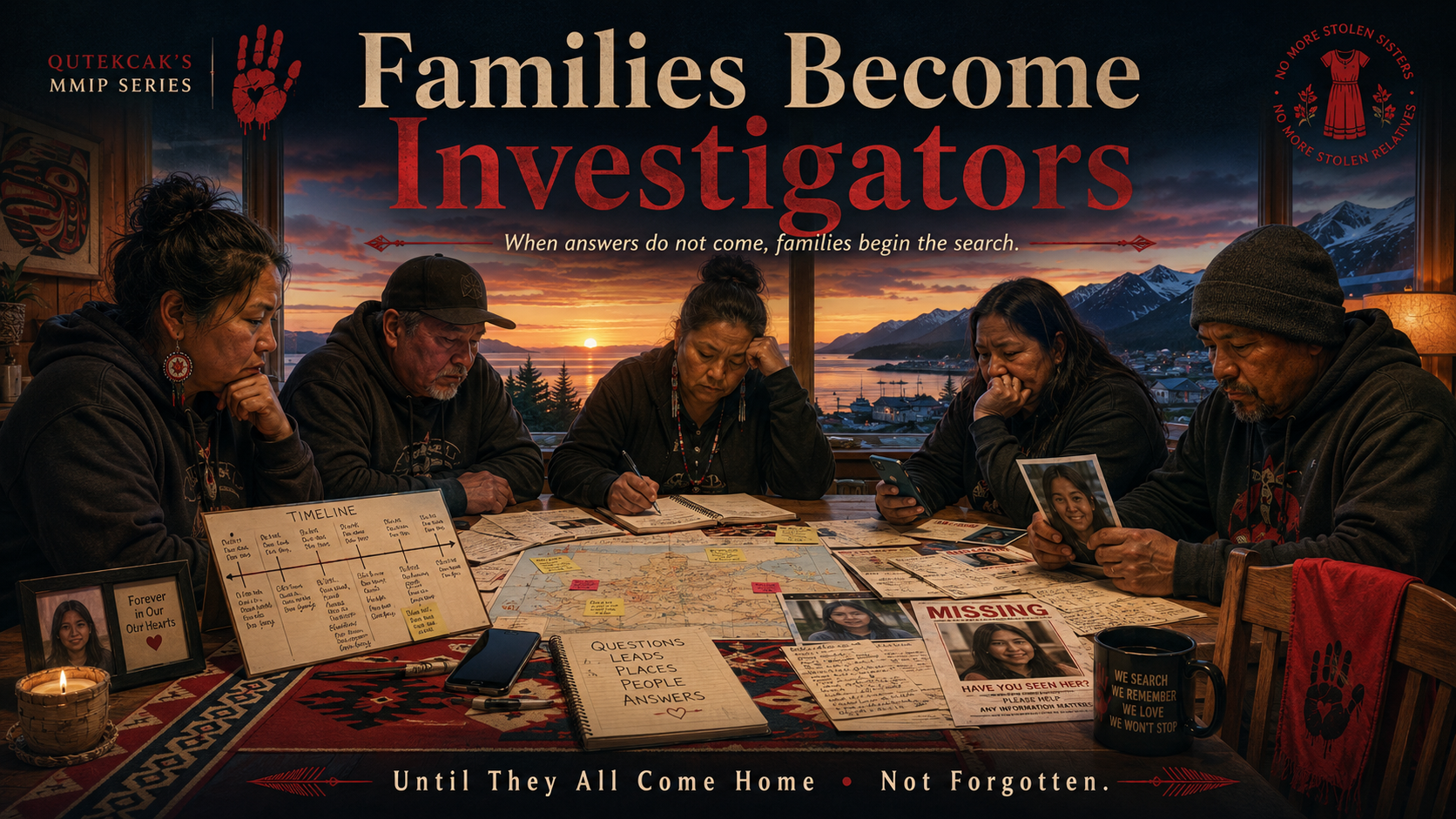
Many MMIP families never expected to learn about police reports, missing-person databases, jurisdiction, search efforts, case numbers, records requests, media interviews, social-media campaigns, or advocacy.
But suddenly, they have to.
A mother becomes the person organizing search teams.
A sister starts maintaining a timeline.
A father learns how to speak to reporters.
An auntie creates flyers.
A cousin tracks tips coming through Facebook.
A family member becomes the person making phone call after phone call because they are terrified that if they stop pushing, the case will stop moving.
Families often carry responsibilities they never asked for.
They do it because someone they love is gone.
Then Come the Questions
Families may also have to endure questions that should never overshadow the missing person.
Why were they there?
Who were they with?
Were they drinking?
Were they using drugs?
Were they homeless?
Were they in trouble?
Did they leave voluntarily?
Were they in a bad relationship?
Why didn't the family know sooner?
There may be legitimate investigative questions that need answers.
But there is an important difference between gathering information and assigning blame.
A person's circumstances do not determine whether they deserve to be found.
Their struggles do not erase their humanity.
Their mistakes do not make their disappearance less important.
And their family should never have to prove that their loved one was “perfect” before the world decides that person matters.
Missing is missing.
A family searching is a family hurting.
The Siblings Carry It Too
MMIP touches entire families.
Brothers and sisters may feel guilty for arguments they had years ago.
Children may grow up asking why their parent never came home.
Grandparents may spend the rest of their lives waiting for an answer.
Parents may question every decision they ever made.
Some relatives become consumed with searching.
Others cannot speak about it at all.
Everyone grieves differently.
And sometimes those differences create additional tension inside families already carrying enormous pain.
One person wants every detail public.
Another wants privacy.
One wants to keep searching every day.
Another is exhausted.
One believes there is still hope.
Another believes they already know what happened.
There is no single correct way to survive the disappearance of someone you love.
Children Feel the Absence
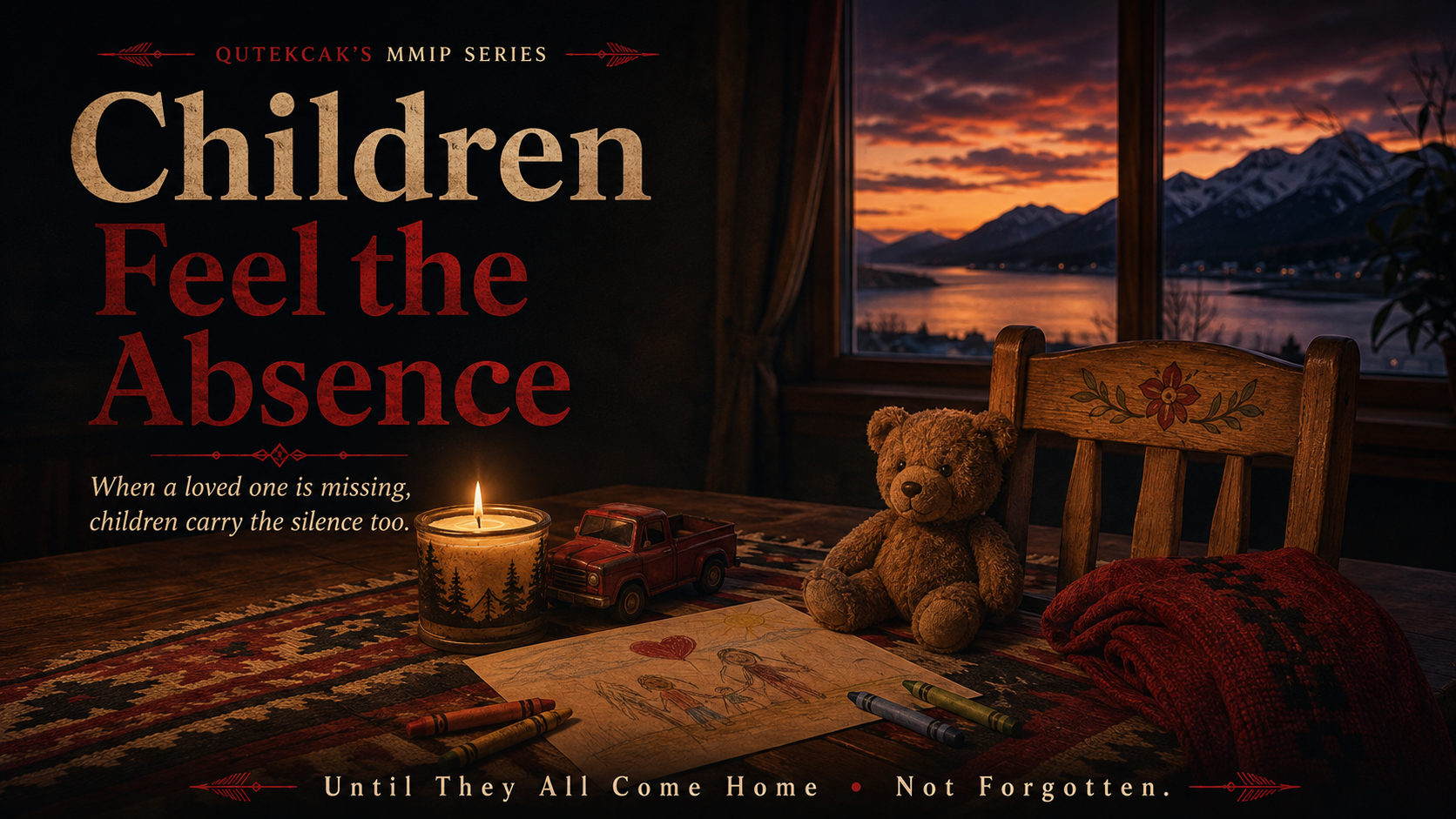
Children notice empty chairs too.
They hear adults whispering.
They feel tension.
They see tears.
They notice when birthdays change.
They understand far more than adults sometimes realize.
A missing or murdered parent, sibling, auntie, uncle, grandparent, or relative can leave questions that follow a child for years.
Why did they leave?
Are they coming back?
Did someone hurt them?
Could this happen to me?
Was it because of something I did?
Those children deserve age-appropriate truth, reassurance, stability, connection, and people who continue reminding them that they are loved.
They should never have to carry adult-sized grief alone.
Communities Grieve Too
In close communities, one person missing can affect hundreds of people.
Someone remembers seeing them at the store.
Someone went to school with them.
Someone coached them.
Someone worked beside them.
Someone knew their parents.
Someone remembers them as a child.
Someone was expecting them at dinner.
That is why MMIP is not simply an individual tragedy.
The absence ripples outward.
It reaches families.
Friends.
Tribal communities.
Schools.
Workplaces.
Generations.
When one of our people disappears, the community feels that empty space.
What Support Can Look Like
Supporting an MMIP family does not always require knowing what to say.
Often, there are no perfect words.
Support can look like bringing dinner.
Helping distribute flyers.
Watching someone's children while they attend meetings.
Helping organize information.
Giving someone a ride.
Sitting beside them during difficult phone calls.
Remembering important dates.
Checking in months after everyone else has stopped.
Listening without trying to solve the impossible.
And sometimes support means simply saying:
“I haven't forgotten.”
Those four words matter.
Do Not Make Families Carry Awareness Alone
Families should not have to repeatedly expose their deepest pain just to convince the public to care.
They should not be responsible for keeping MMIP visible by themselves.
Communities can carry part of that responsibility.
We can continue the conversation.
We can educate ourselves.
We can share accurate information.
We can support prevention work.
We can remember names.
We can create spaces where families are allowed to speak — and spaces where they are allowed to remain silent.
Because advocacy should never require a family to reopen the same wound every day.
The Empty Chair Still Belongs to Someone
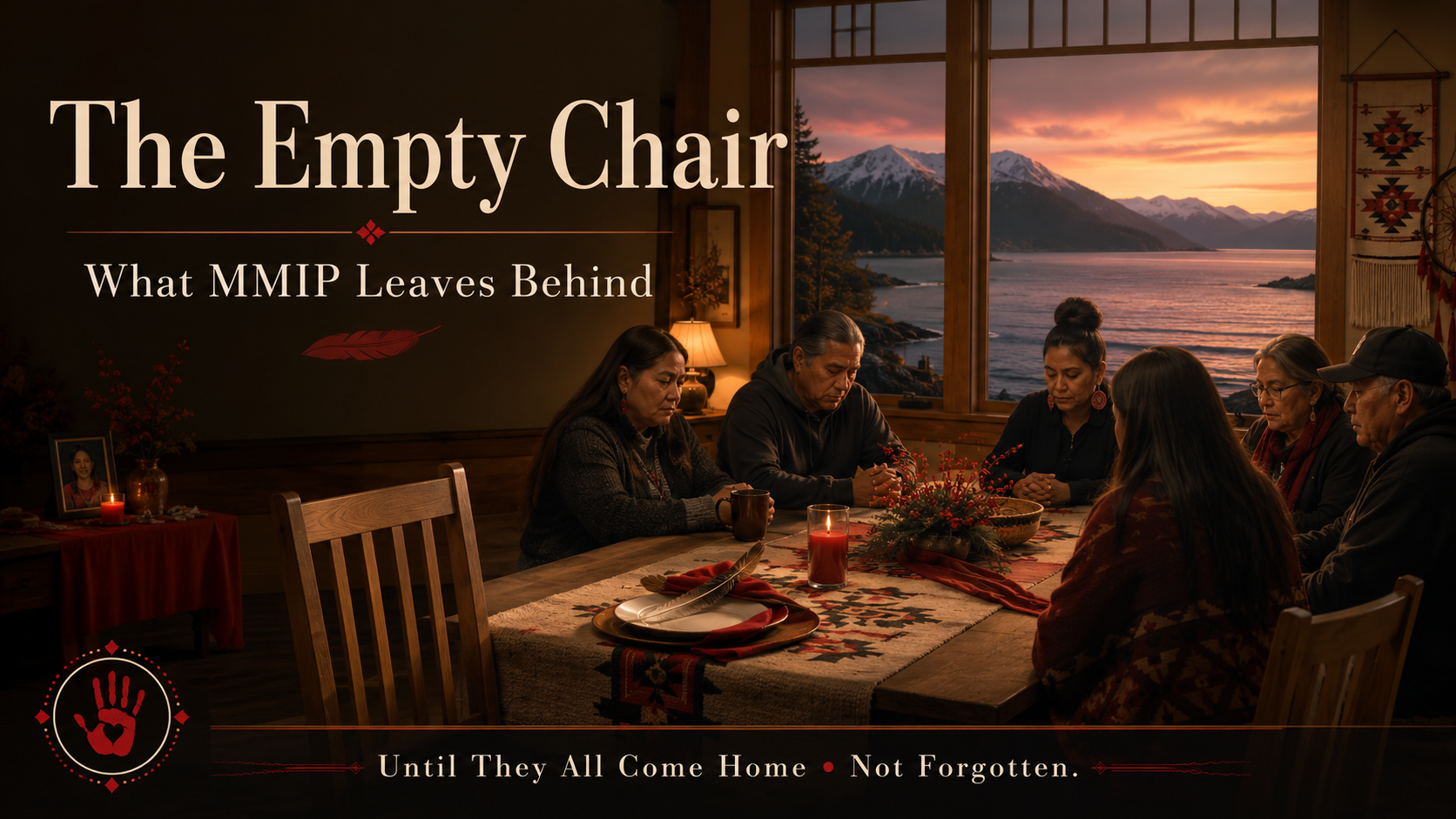
Every missing person left something behind.
A bedroom.
A jacket.
A coffee mug.
Work boots.
A favorite blanket.
A fishing pole.
A voicemail.
A child's drawing.
A place at the dinner table.
Ordinary things become reminders of an extraordinary absence.
And those reminders are why we must never speak about MMIP only as numbers.
Numbers cannot show us the empty chair.
Statistics cannot explain what it feels like when a mother wakes up wondering whether her child is cold somewhere.
A case file cannot capture what a daughter feels when she no longer remembers the sound of her father's voice.
Behind every MMIP case is a world of people affected by that one person's absence.
To the Families Still Waiting
Qutekcak Native Tribe wants families carrying this uncertainty to know something:
Your loved one is more than a case number.
Their life mattered before they went missing.
Their story matters now.
And your family matters too.
You should not have to stop loving them because time has passed.
You should not have to stop asking questions because the story is no longer new.
You should not have to apologize for continuing to search.
You should not have to carry their memory alone.
There will always be an empty chair somewhere.
But there should never be an empty place in our memory.
We will continue saying their names.
We will continue talking about the families.
We will continue creating space for the stories that deserve to be heard.
We will continue remembering.
Until they all come home.
Not forgotten.
Not their names.
Not their stories.
And never the families still waiting.
